Why the future of multicultural marketing belongs to the architects.

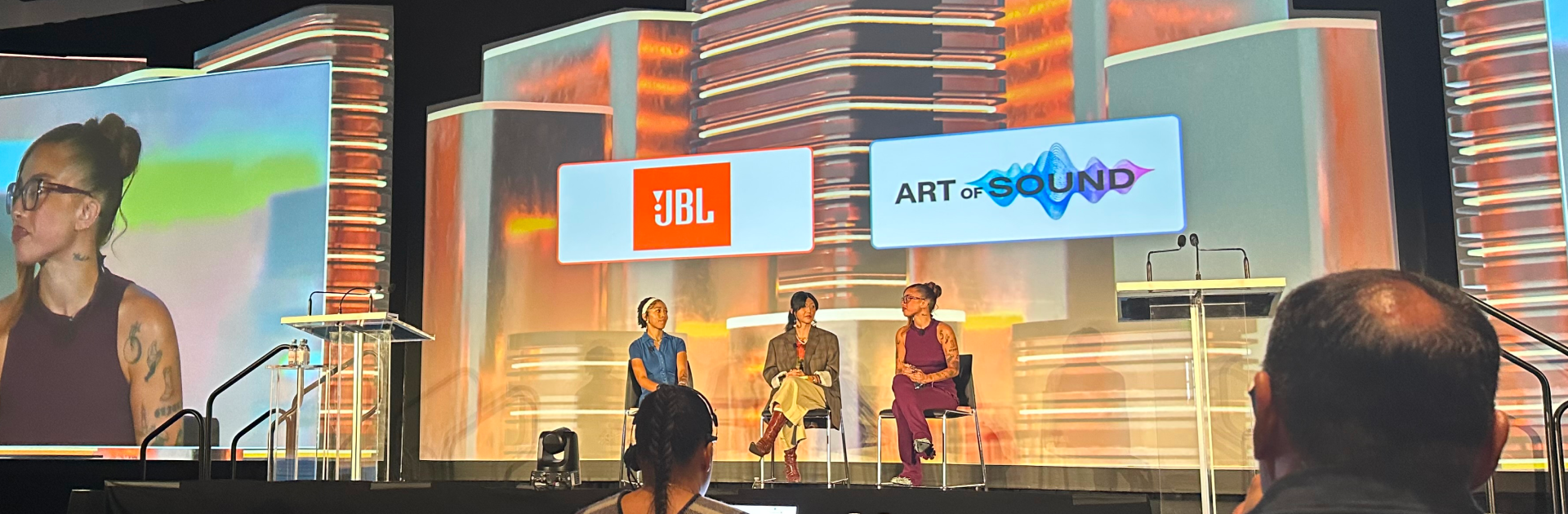
Looking around the opening ballroom at the 2026 ANA Multicultural and Inclusive Marketing Conference, the room told a story before anyone even stepped up to the podium.
Attendance was noticeably lighter than in years past, and the foyer held fewer sponsor banners and activations than usual. In many ways, that quieter room felt like a real-time microcosm of multicultural marketing and the broader advertising industry right now.
Across corporate America, external socio-political shocks have triggered a massive pendulum swing. Budgets are being tightened, legal teams are flagging basic inclusive marketing language as "brand risk," layoffs have thinned internal advocacy, and the acronym "DEI+B" itself is being quietly scrubbed from decks across the country.
Sitting there, I couldn’t help but think about my own career path. I’ll be completely honest: my creative tank was running on fumes.
When you dedicate your professional life to multicultural marketing and inclusive strategy, watching the industry pull back feels deeply personal. It forces you to ask hard questions about where this discipline stands today, and whether the path you’ve built has a real future.
Yet, once the conversations began, the energy in the room gave my outlook the exact reset it needed.
Where multicultural marketing stands vs. where it’s going.
Right now, corporate America is stuck in an expensive contradiction.
Retiring ANA CEO Bob Liodice pointed out that while brands are staring down a $250 billion cultural growth gap, only 5% to 6% of total media investment actually goes toward cultural marketing.
If the old era of DEI+B was defined by isolated departments and performative checklists, the consensus in the room was clear: we can’t look back and try to reapply what’s been done. The acronym might be evolving, but the modern consumer reality isn't going anywhere. Young Black, Hispanic, Asian, and LGBTQ+ consumers are the growth market.
Where this work is going—and where my own career energy is now firmly pointed—is away from "DEI+B as a checkbox" and toward cultural fluency as a non-negotiable business operating system.
As Moonbug’s Bao Nguyen put it, “Being specific and being universal aren’t totally different.”
We saw that loud and clear with Bad Bunny’s halftime reign. He didn't translate his lyrics, alter his accent, or sand down his Puerto Rican roots to win over Middle America. He stayed stubbornly, brilliantly specific, and the entire globe pulled up a chair. Audiences rent, but fans belong.
Bridging heart and head: The Protect Our Piece blueprint.
Capturing notes until my hand cramped, I found myself reflecting on our own project, Protect Our Piece.
When we built it, we didn't start with a generic brand manifesto. We were specific.
We started with the plastic-covered couch. Anyone who grew up in a Black home knows that squeaky, unmistakable vinyl wasn't tacky decor. It was an altar of domestic preservation.
You wrapped the good furniture because it took too much sacrifice to buy, and it had to last generations. In a world where Black history, books, and programs are constantly targeted for erasure, putting a living, community-stitched archive beneath plastic was an act of radical care.
Yet the conference reinforced a critical truth: heart alone won’t protect this work. As leaders from McDonald's and Ally noted, marketing is 80% head and 20% nuance, meaning cultural storytelling needs clear KPIs and operational rigor to survive.
That discipline is what makes our plastic couch more than an art installation:
- Community co-creation: By taking the installation to spaces like CultureCon, we turned passive observers into co-creators who stitched their own stories directly into the fabric.
- Search engine optimization and digital authority: By translating those stitched topics into an intentional SEO hub on the Protect Our Piece website, we are actively reclaiming digital search space around Black culture while driving measurable organic authority.
- Institutional equity: By pursuing permanent homes like the DuSable Black History Museum and Education Center and the Obama Presidential Center, we're building lasting cultural equity rather than a one-off campaign.
The career takeaway for modern marketers.
In my notes from day two, I wrote down a question that had been haunting me: "Cultural relevance builds trust, so as marketers, what do we actually do with that trust once we have it?"
Leaving the conference, I realized that the lighter crowd wasn't a sign that multicultural marketing is fading. It was a sorting mechanism. The brands and leaders who only showed up when DEI+B was trendy and easy have stepped back.
What’s left in the room are the architects.
For anyone building a career in this space right now, the path forward isn't about waiting for corporate budgets to rebound or clinging to old labels. It’s about becoming indispensable by translating unapologetic cultural truth into undeniable business growth.
One speaker reminded us to “just keep going, because the next generation of leaders needs us to be courageous and expand the table in which they can pull up a chair.”
The foyer may have been quieter this year, but the conviction inside the ballroom was louder than ever. I came back to Chicago with my fire relit, ready to build more seats at the table.
Don't rent attention. Build belonging.
Is your brand ready to translate unapologetic cultural truth into undeniable business growth?