Understanding the protein paradox: where soil health meets consumer demand.

The big picture.
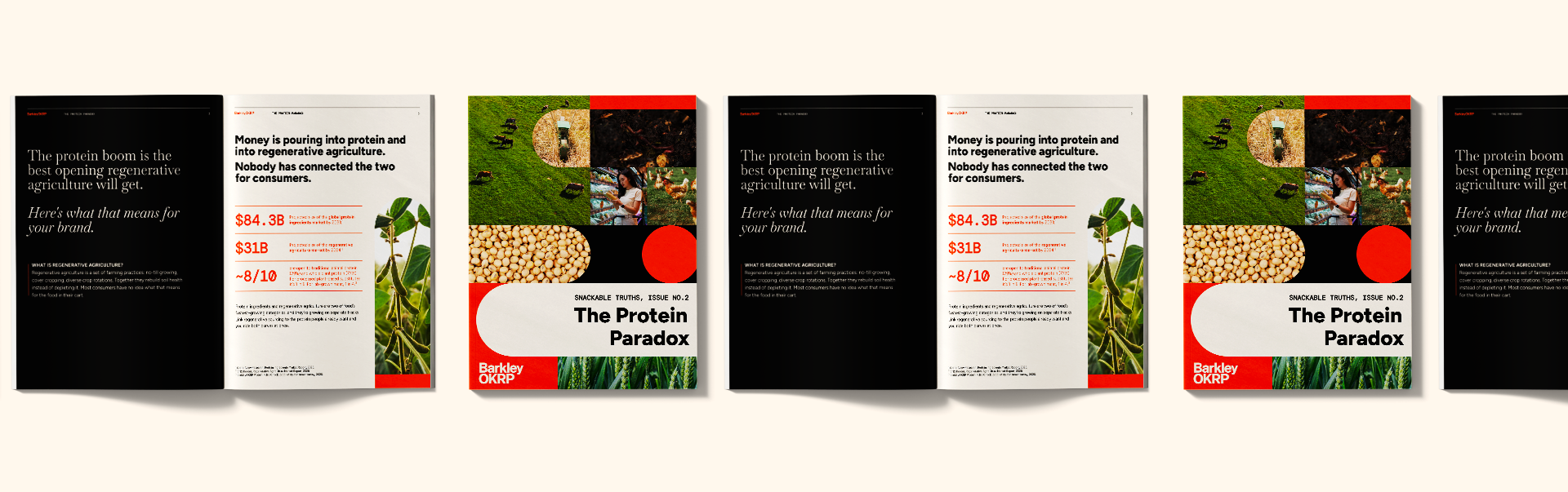
The market around protein is booming, projected to reach $84.3B by 2033. At the same time, regenerative agriculture is gaining momentum as a $31B movement by 2034.
Yet, for the average shopper, these two worlds haven't crossed paths. Most consumers are buying protein for personal health, while regenerative practices are largely framed around climate and environmental impact. Bridging this understanding isn't just about market positioning—it's about responding to what consumers genuinely care about when choosing what to eat.
Key insights from the research.
1. Health is the front door.
While 66% of consumers prioritize protein for personal health—driven by healthy aging and weight management—fewer than 3% cite environmental benefits as their primary driver.
- The takeaway. Soil health is the engine behind regenerative farming, but personal nutrient density is the outcome that resonates at the grocery store. Preliminary studies show regeneratively farmed crops can yield up to 34% higher levels of key nutrients, offering a tangible link between healthy soil and healthy people.
2. The mindset shift toward whole foods.
Consumer interest is pivoting toward foundational nutrition over heavy processing.
- Roughly 8 in 10 shoppers remain open to traditional animal protein (79%) and whole plant proteins (77%).
- By contrast, willingness to buy processed substitutes (20%) and lab-grown options (25%) trails significantly.
3. Overcoming the credibility gap.
Interest in sustainable food systems is high, but so is skepticism. 69% of consumers say they can't define "regenerative agriculture," and over half suspect it may be a marketing buzzword rather than a verified standard.
Building long-term trust requires moving away from brand-centric claims and leaning on independent farm-level data, registered dietitians, and digital supply chain traceability that shoppers can verify for themselves.
Looking ahead.
Between 2013 and 2024, sustainability-marketed products accounted for 41% of all CPG growth. The opportunity ahead lies in shared definitions, transparent proof, and putting the focus back on whole, nutrient-dense foods.
Whether you’re shaping supply chains, leading brand innovation, or crafting food policy, bridging the gap between soil health and consumer health will define the next chapter of food.
Explore the full analysis.
To dig deeper into the proprietary survey data, consumer benchmarks, and pre-competitive opportunities shaping the sector, read the complete report: Snackable Truths, Issue No. 2: The Protein Paradox.

Snackable Truths, Issue No. 2: The Protein Paradox.